Back to Gallery
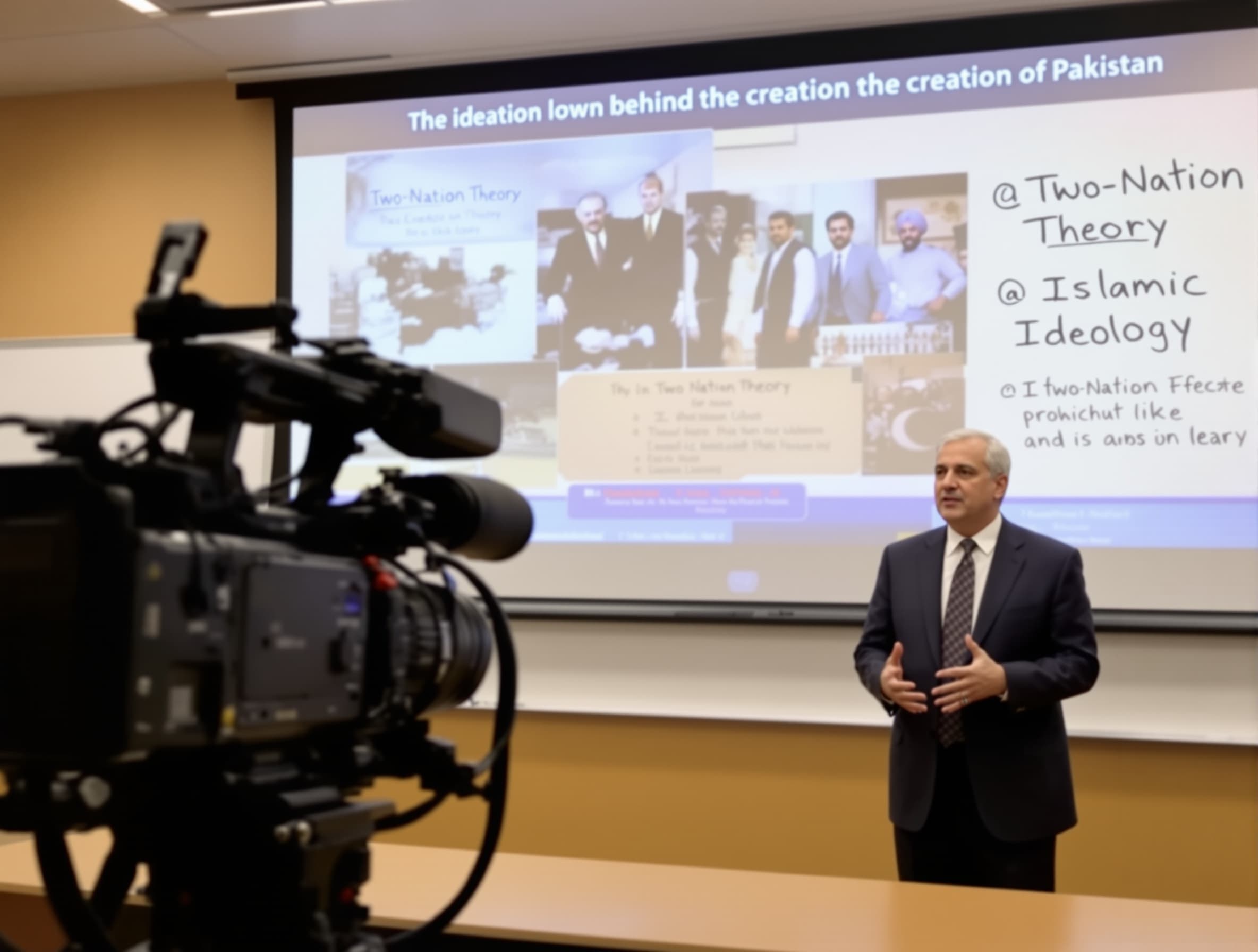
🎬 🎤 DOCUMENTARY SCRIPT: IDEOLOGY AND THE CREATION OF PAKISTAN 🎥 🎙️ INTRODUCTION (Hook) “What is ideology? How can a set of ideas shape the destiny of a nation? From powerful philosophies to the creation of Pakistan, ideology has played a central role in human history. Ideas are not just thoughts—they influence actions, movements, and even revolutions. In this documentary, we explore the meaning of ideology, how it emerges, why it is important, and how it led to the creation of Pakistan.” 🎥 🎙️ PART 1: WHAT IS IDEOLOGY? “Ideology is a system of beliefs and ideas that explains how society works and how it should be organized. It provides a framework through which people understand the world and their place in it. The term ‘ideology’ was first introduced by the French philosopher Antoine Destutt de Tracy during the French Revolution. He described it as the ‘science of ideas’—the study of how ideas originate, develop, and influence human thinking. Later, Karl Marx gave a different perspective. He argued that ideology represents the ideas of the ruling class, used to maintain their dominance and control over society. According to him, ideology can shape how people think, often without them realizing its influence. Similarly, Karl Mannheim viewed ideology as a set of ideas that are often biased and serve the interests of dominant groups. In modern terms, ideology is not just a theory—it is a complete system of beliefs that explains the past, guides the present, and shapes the future.” 🎥 🎙️ PART 2: HOW IDEOLOGY EMERGES “Ideology does not appear suddenly; it develops over time in response to social conditions. When people feel oppressed, treated unfairly, or denied their rights, they begin to question the existing system. These feelings give rise to new ideas and alternative visions of society. As dissatisfaction grows, these ideas spread among groups of people who share similar experiences. Over time, these ideas become stronger and more organized, eventually forming a clear ideology. Such ideologies often challenge existing systems and can lead to significant social and political change. In this way, ideology becomes a powerful force that shapes history and transforms societies.” 🎥 🎙️ PART 3: IMPORTANCE OF IDEOLOGY “Ideology plays a crucial role in shaping nations and societies. It provides people with a sense of direction and purpose. First, ideology unites people under a common vision. It creates a shared identity and strengthens bonds among individuals. Second, it motivates people to work together toward collective goals. Whether it is independence, reform, or justice, ideology inspires action. Third, throughout history, ideologies have led to revolutions, the creation of new nations, and the development of cultures and civilizations. However, a strong ideology also requires commitment, discipline, and unity among its followers. Without these, even the most powerful ideas cannot succeed.” 🎥 🎙️ PART 4: PAKISTAN IDEOLOGY “The ideology of Pakistan is deeply rooted in the principles of Islam. It emerged as a response to the political, social, and cultural challenges faced by Muslims in the Indian subcontinent. Muslims feared that under a system dominated by others, they would lose their religious freedom, cultural identity, and social values. This concern led to the development of a unique ideological movement. The slogan ‘Pakistan ka matlab kya — La ilaha illallah’ became the foundation of this vision. Unlike many other nations, Pakistan was created not just on geographical or political grounds, but on the basis of an ideology derived from religion. This makes its creation a unique event in modern history.” 🎥 🎙️ PART 5: TWO-NATION THEORY “At the heart of Pakistan’s ideology lies the Two-Nation Theory. This theory states that Muslims and Hindus were two separate nations with distinct religions, cultures, traditions, and ways of life. They could not merge into a single nation without losing their identities. The pioneer of this idea was Sir Syed Ahmed Khan, who emphasized that the differences between the two communities were fundamental and could not be ignored. Over time, this concept gained support and became the foundation for the demand for a separate homeland—Pakistan. The Two-Nation Theory transformed a social idea into a political movement, ultimately leading to the creation of a new state.” 🎥 🎙️ PART 6: KEY DIFFERENCES “The differences between Muslims and Hindus were significant and deeply rooted. Religiously, Islam is based on the belief in one God, while Hinduism includes multiple deities and diverse spiritual practices. Culturally, both communities followed different traditions, customs, and social systems. Their ways of life, festivals, and values were distinct. Economically and politically, inequalities further widened the gap. Muslims often felt marginalized and underrepresented in key areas of power. These differences strengthened the belief that coexistence under a single system would be difficult, reinforcing the demand for a separate nation.” 🎥 🎙️ PART 7: AIMS OF PAKISTAN “The creation of Pakistan was driven by several important objectives. First, to establish a system based on the sovereignty of God. Second, to create an Islamic democratic state built on equality, justice, and fairness. Third, to protect and revive the identity of Muslims in the subcontinent. Fourth, to preserve and promote Muslim culture and civilization. Fifth, to implement the Two-Nation Theory in practice. And finally, to establish a balanced economic system that ensures stability and fairness for all citizens. These aims provided a clear direction for the new nation and continue to shape its identity.” 🎥 🎙️ CONCLUSION (Strong Ending) “In conclusion, ideology is more than just a set of ideas—it is a powerful force that shapes history. The ideology of Pakistan united millions of people under a common vision and led to the creation of a new nation. It transformed hopes into reality and ideas into action. Even today, ideology remains a guiding principle. It helps us understand the past, shape the present, and build the future. Because in the end, nations are not built by land alone—they are built by ideas.

Prompt

🎬 🎤 DOCUMENTARY SCRIPT: IDEOLOGY AND THE CREATION OF PAKISTAN 🎥 🎙️ INTRODUCTION (Hook) “What is ideology? How can a set of ideas shape the destiny of a nation? From powerful philosophies to the creation of Pakistan, ideology has played a central role in human history. Ideas are not just thoughts—they influence actions, movements, and even revolutions. In this documentary, we explore the meaning of ideology, how it emerges, why it is important, and how it led to the creation of Pakistan.” 🎥 🎙️ PART 1: WHAT IS IDEOLOGY? “Ideology is a system of beliefs and ideas that explains how society works and how it should be organized. It provides a framework through which people understand the world and their place in it. The term ‘ideology’ was first introduced by the French philosopher Antoine Destutt de Tracy during the French Revolution. He described it as the ‘science of ideas’—the study of how ideas originate, develop, and influence human thinking. Later, Karl Marx gave a different perspective. He argued that ideology represents the ideas of the ruling class, used to maintain their dominance and control over society. According to him, ideology can shape how people think, often without them realizing its influence. Similarly, Karl Mannheim viewed ideology as a set of ideas that are often biased and serve the interests of dominant groups. In modern terms, ideology is not just a theory—it is a complete system of beliefs that explains the past, guides the present, and shapes the future.” 🎥 🎙️ PART 2: HOW IDEOLOGY EMERGES “Ideology does not appear suddenly; it develops over time in response to social conditions. When people feel oppressed, treated unfairly, or denied their rights, they begin to question the existing system. These feelings give rise to new ideas and alternative visions of society. As dissatisfaction grows, these ideas spread among groups of people who share similar experiences. Over time, these ideas become stronger and more organized, eventually forming a clear ideology. Such ideologies often challenge existing systems and can lead to significant social and political change. In this way, ideology becomes a powerful force that shapes history and transforms societies.” 🎥 🎙️ PART 3: IMPORTANCE OF IDEOLOGY “Ideology plays a crucial role in shaping nations and societies. It provides people with a sense of direction and purpose. First, ideology unites people under a common vision. It creates a shared identity and strengthens bonds among individuals. Second, it motivates people to work together toward collective goals. Whether it is independence, reform, or justice, ideology inspires action. Third, throughout history, ideologies have led to revolutions, the creation of new nations, and the development of cultures and civilizations. However, a strong ideology also requires commitment, discipline, and unity among its followers. Without these, even the most powerful ideas cannot succeed.” 🎥 🎙️ PART 4: PAKISTAN IDEOLOGY “The ideology of Pakistan is deeply rooted in the principles of Islam. It emerged as a response to the political, social, and cultural challenges faced by Muslims in the Indian subcontinent. Muslims feared that under a system dominated by others, they would lose their religious freedom, cultural identity, and social values. This concern led to the development of a unique ideological movement. The slogan ‘Pakistan ka matlab kya — La ilaha illallah’ became the foundation of this vision. Unlike many other nations, Pakistan was created not just on geographical or political grounds, but on the basis of an ideology derived from religion. This makes its creation a unique event in modern history.” 🎥 🎙️ PART 5: TWO-NATION THEORY “At the heart of Pakistan’s ideology lies the Two-Nation Theory. This theory states that Muslims and Hindus were two separate nations with distinct religions, cultures, traditions, and ways of life. They could not merge into a single nation without losing their identities. The pioneer of this idea was Sir Syed Ahmed Khan, who emphasized that the differences between the two communities were fundamental and could not be ignored. Over time, this concept gained support and became the foundation for the demand for a separate homeland—Pakistan. The Two-Nation Theory transformed a social idea into a political movement, ultimately leading to the creation of a new state.” 🎥 🎙️ PART 6: KEY DIFFERENCES “The differences between Muslims and Hindus were significant and deeply rooted. Religiously, Islam is based on the belief in one God, while Hinduism includes multiple deities and diverse spiritual practices. Culturally, both communities followed different traditions, customs, and social systems. Their ways of life, festivals, and values were distinct. Economically and politically, inequalities further widened the gap. Muslims often felt marginalized and underrepresented in key areas of power. These differences strengthened the belief that coexistence under a single system would be difficult, reinforcing the demand for a separate nation.” 🎥 🎙️ PART 7: AIMS OF PAKISTAN “The creation of Pakistan was driven by several important objectives. First, to establish a system based on the sovereignty of God. Second, to create an Islamic democratic state built on equality, justice, and fairness. Third, to protect and revive the identity of Muslims in the subcontinent. Fourth, to preserve and promote Muslim culture and civilization. Fifth, to implement the Two-Nation Theory in practice. And finally, to establish a balanced economic system that ensures stability and fairness for all citizens. These aims provided a clear direction for the new nation and continue to shape its identity.” 🎥 🎙️ CONCLUSION (Strong Ending) “In conclusion, ideology is more than just a set of ideas—it is a powerful force that shapes history. The ideology of Pakistan united millions of people under a common vision and led to the creation of a new nation. It transformed hopes into reality and ideas into action. Even today, ideology remains a guiding principle. It helps us understand the past, shape the present, and build the future. Because in the end, nations are not built by land alone—they are built by ideas.

Try This Prompt𝕏 Post

Create your own

100 free credits on signup. No credit card needed.

Start Creating Free